Your own trusted data environment, without the build project
Deploy a secure data marketplace, exchange, or distribution platform in weeks, with Harbr's white-label solution
Talk to us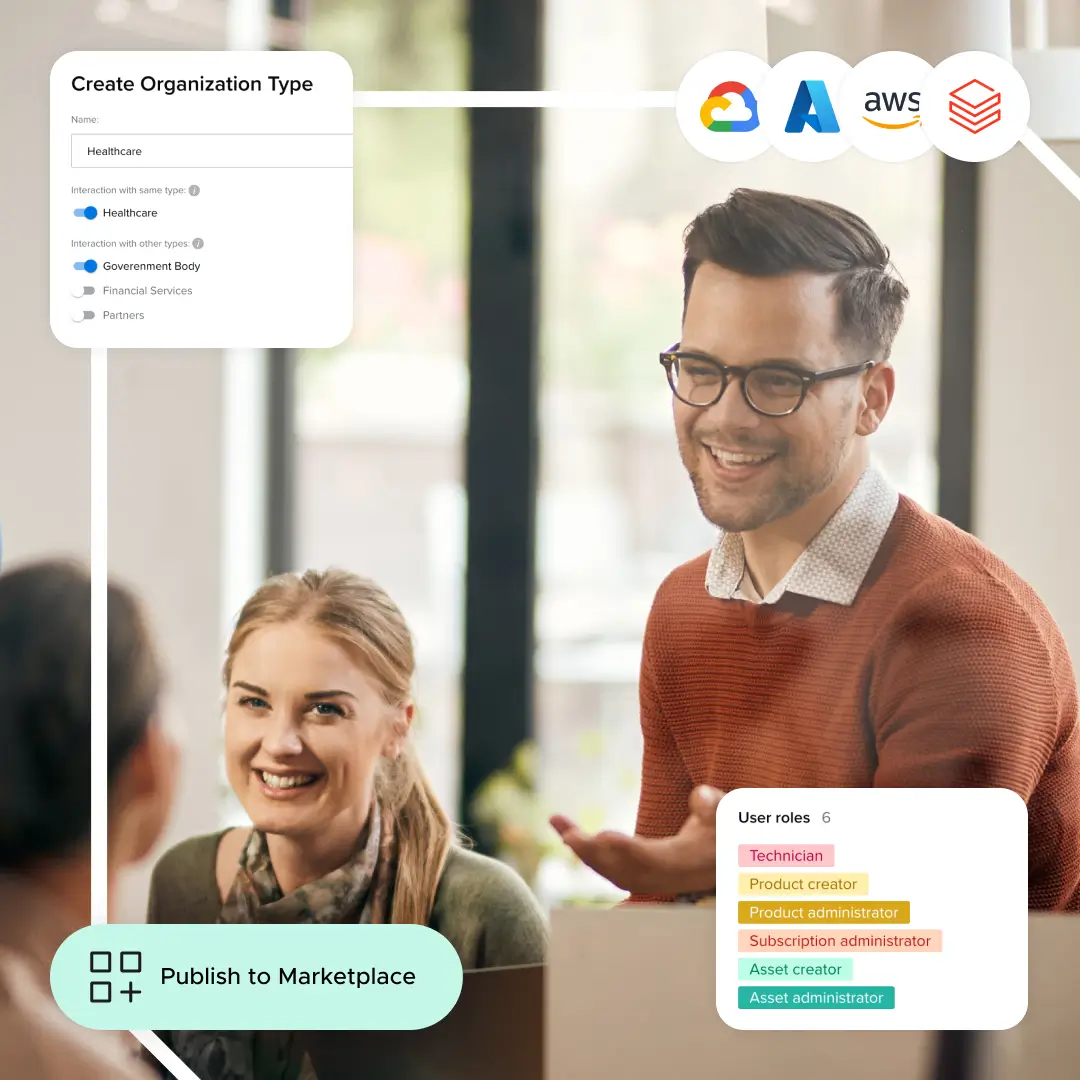










Connect data providers and consumers, from your own branded platform
Bring data providers and consumers together in your own branded Marketplace
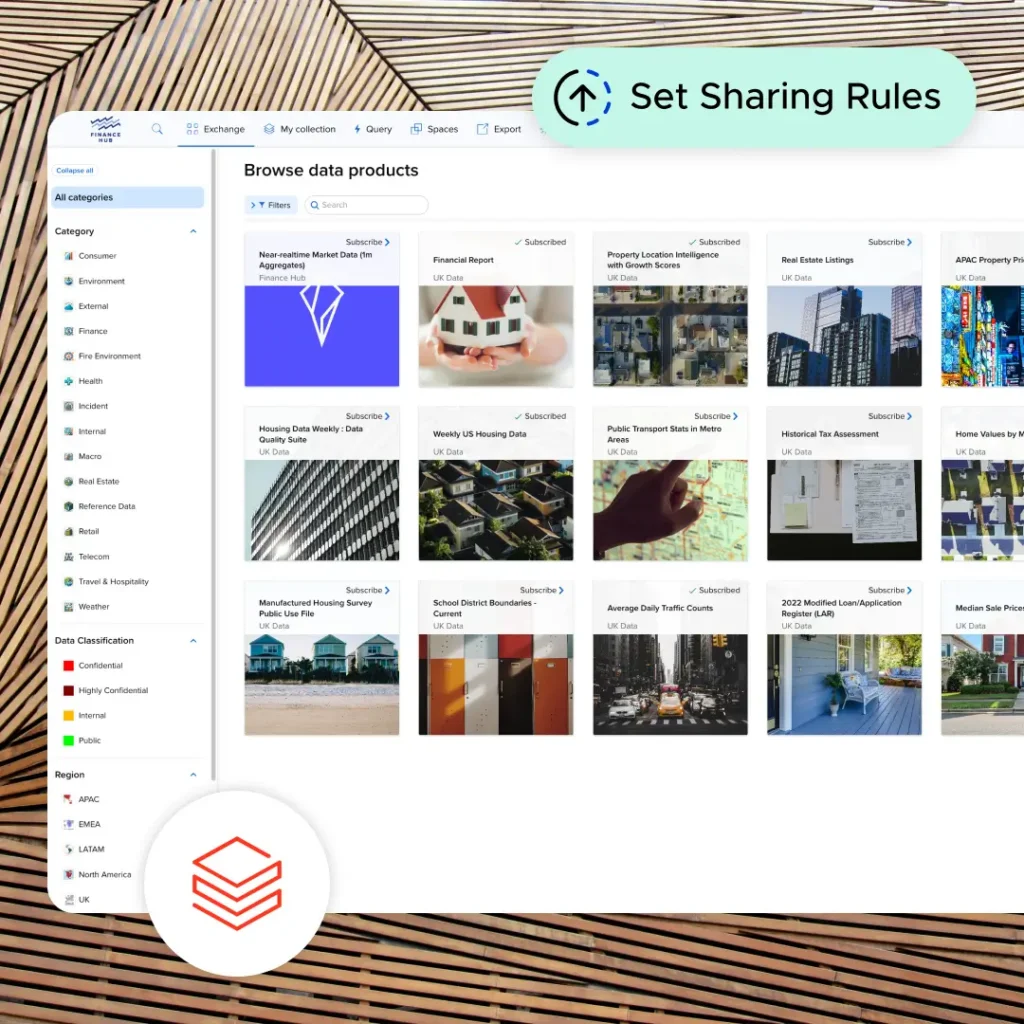
You set the rules of participation. Providers get the tools to manage and govern consumption of their data, while AI and human consumers self-serve within set boundaries.
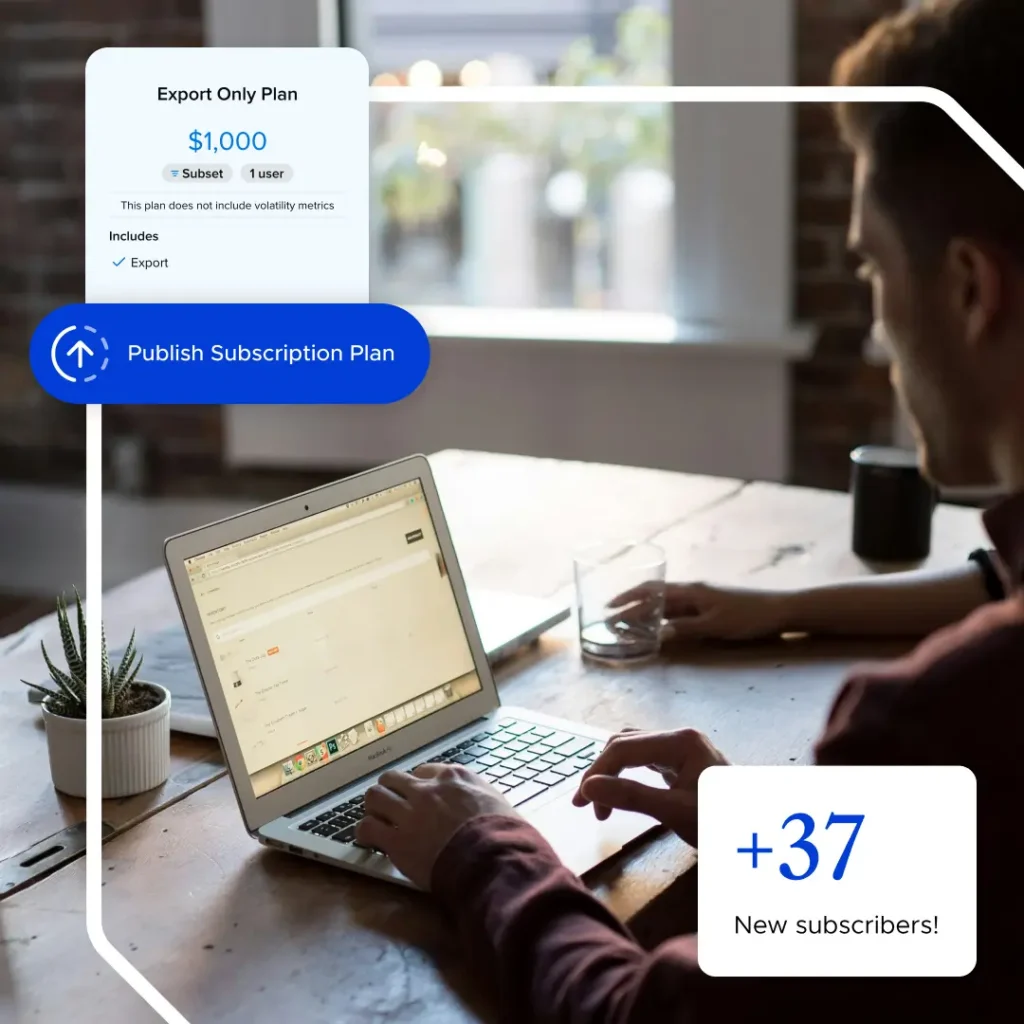
Enable sharing and consumption across entities, in a governed Data Exchange
You set the rules everyone shares under. Each participant governs access to their own data, and consumes others’ data within set boundaries.
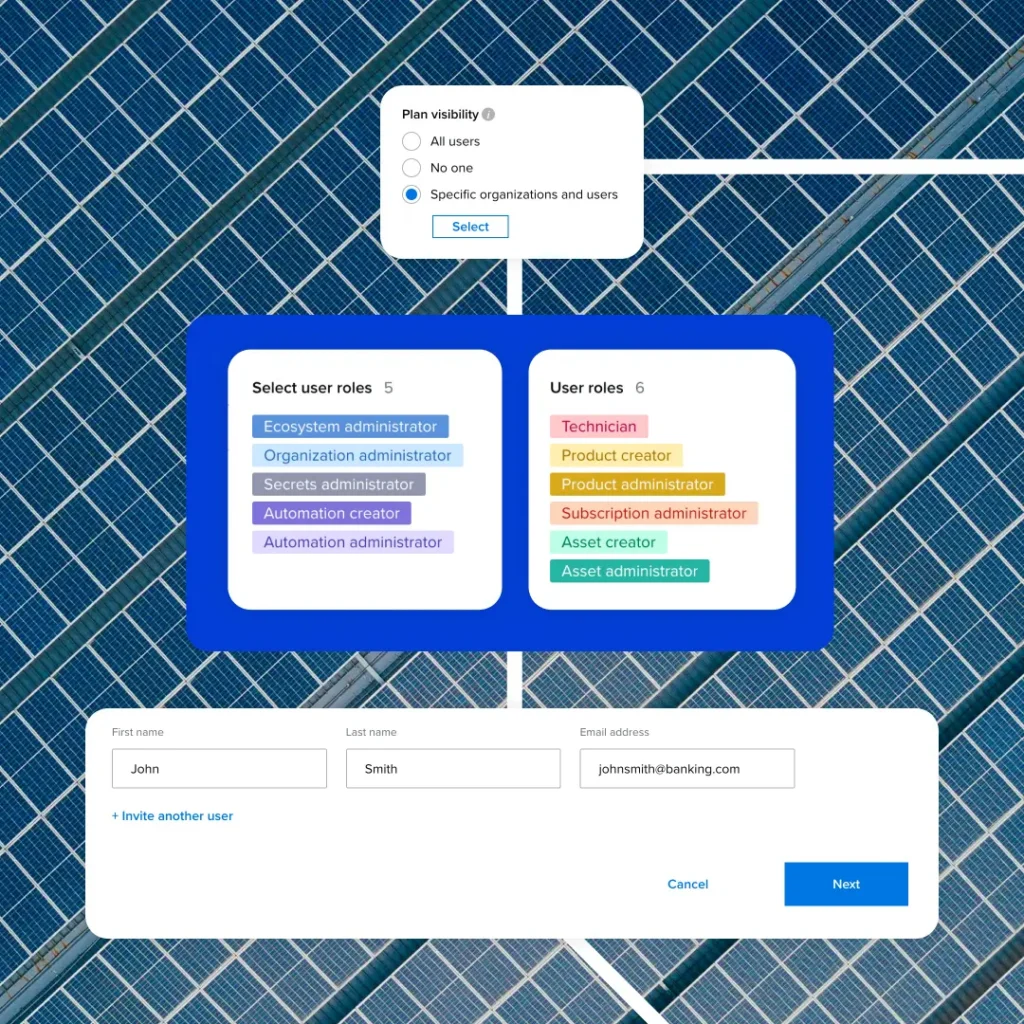
Secure, standardize and scale data distribution; to humans, systems and agents.
Export pipelines and zero copy shares deliver data continuously, built to operationalise it in the consumer’s own environment.
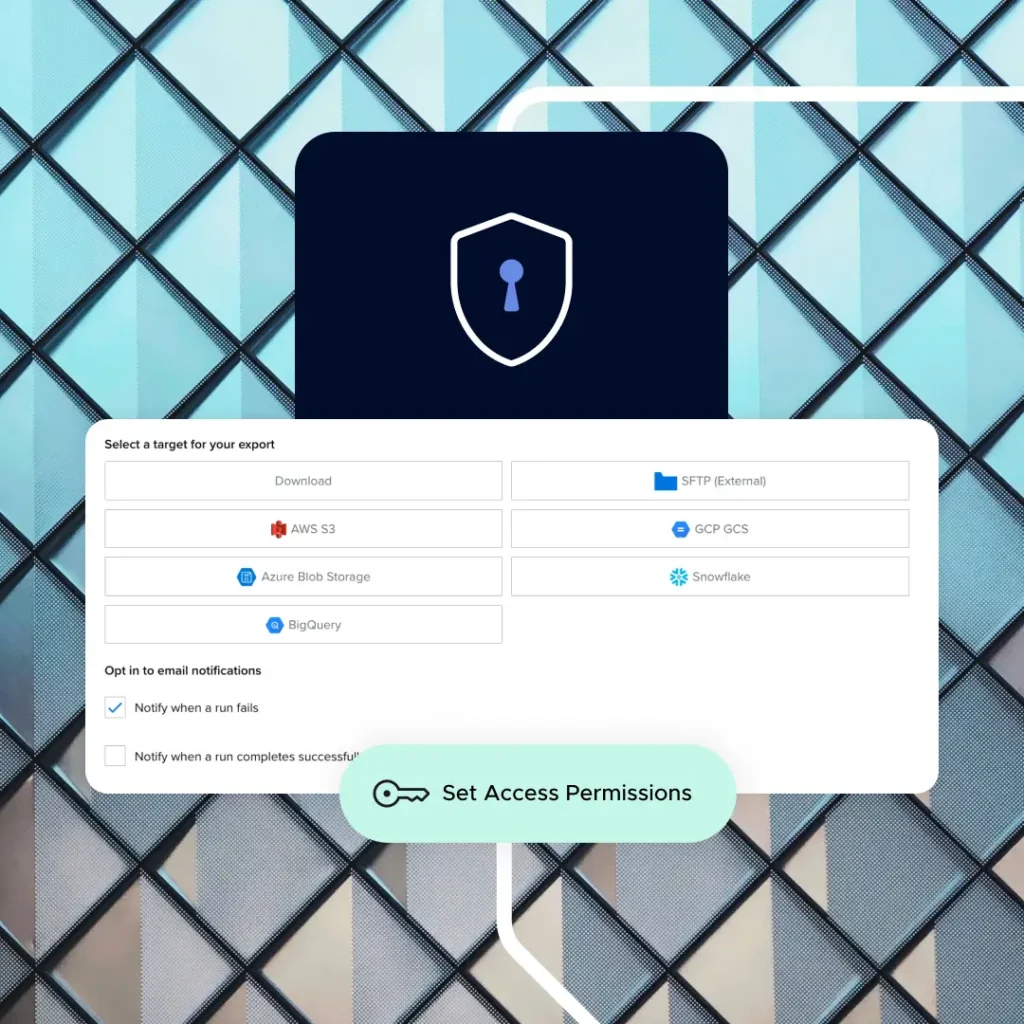
Designed for every stakeholder
Platform operators
With our out-of-the-box solution, you launch a platform, not a project.
- Decide who participates and how organizations see each other
- Apply subscription and pricing templates across the platform
- Enforce quality standards, with consistent meta-data on every product
- Secure the environment and see every interaction in one audit trail
- Go live in weeks, not years
Providers
With Harbr’s technology, data quickly becomes a valuable product.
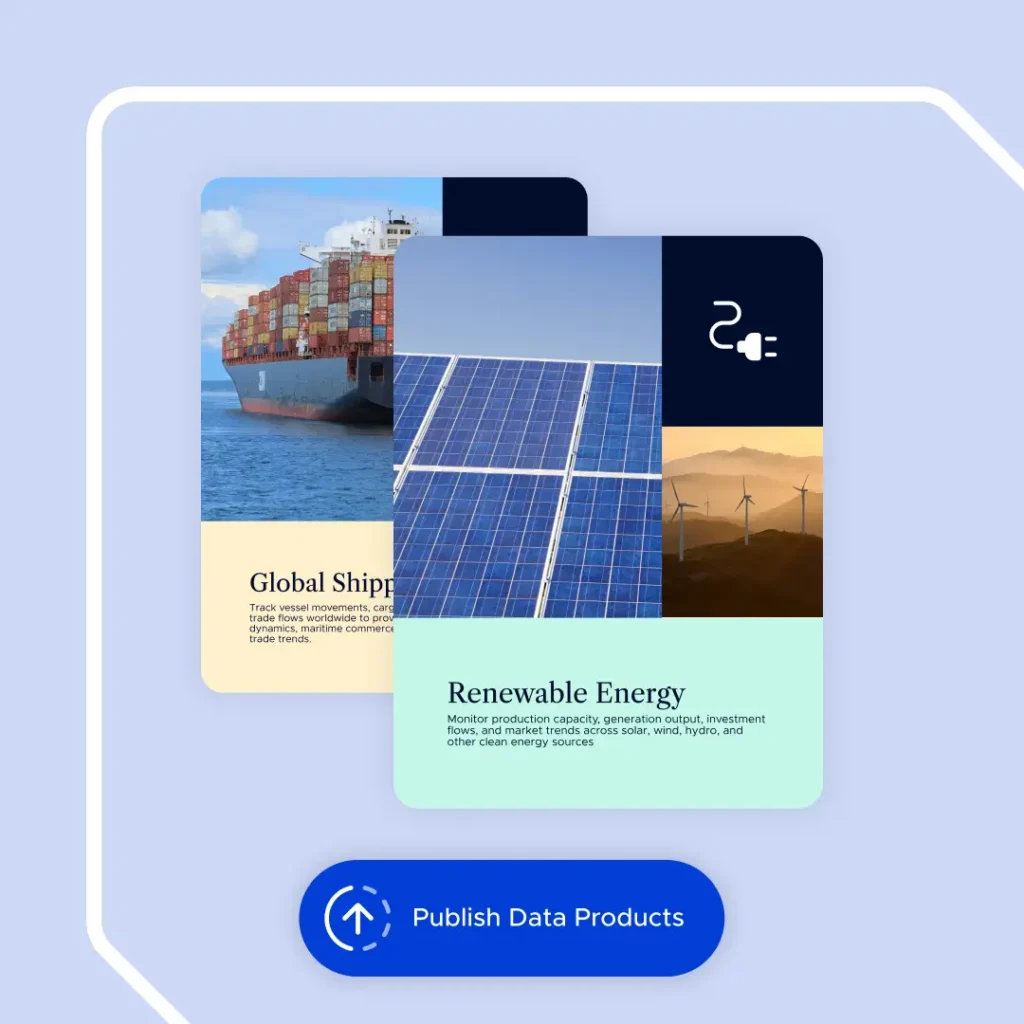
Bundle assets from any source into governed data and AI products
Make one product fit multiple audiences and use cases, with row and column filtering
Put the right data in the right hands, with granular controls from discovery through to sharing
- Set subscription terms per product, and let Harbr
handle delivery
Your consumers
Give your human and AI consumers a trusted environment to find valuable content, and to put it to work
Self-service discovery through personalized homepages and AI-powered search
- End-to-end agent consumption via MCP
- On platform consumption via no-code Query and secure Spaces
Off-platform consumption via OpenShare or Export
Continuous access to current, trusted data
How innovators win with data and AI



Tieto & Harbr: Powering the Nordic data economy
How Tieto built Data Nest — and why they built it on Harbr

Moody’s Analytics optimizes its data business with Harbr
To keep up with increasing customer demands, Moody’s Analytics was determined to offer a better experience for customers and internal stakeholders. Working with Harbr,

Discovery Platform by CoreLogic: Optimizing the data consumer experience
To maintain its position in an increasingly competitive market, CoreLogic partnered with Harbr to bring its world-class data to market in a brand new, customer empowering platform.

Aboitiz drives data innovation with Harbr
ADI launched Parlay, a data exchange platform built on Harbr and powered by AWS.



Quick answers to the questions we’re asked most often.
How do my customers access my Harbr platform?
Harbr platforms are accessed through any modern web browser. Depending on your setup, your customers can access your Harbr with either dedicated login credentials, or through single sign-on (SSO).
Is my Harbr platform publicly accessible?
Access to your Harbr platform is controlled by you. You may choose to have a public website where prospective customers can request access to your platform. A good example of this is Moody’s DataHub, which is built on Harbr.
What's the difference between a data marketplace, a data exchange, and a data distribution platform?
A data marketplace is the sell pattern: you bring multiple providers and consumers together in one governed environment, where each provider controls their own products, pricing and who consumes them, monetized or free.
A data exchange is the share pattern: multiple participants who each both provide and consume, collaborating under one perimeter to unlock value none of them could realise alone.
A data distribution platform is the distribute pattern: continuous, automated delivery of data products out to any number of consumers in their own environment, through export pipelines and zero-copy shares, so you’re not serving each consumer by hand.
Harbr’s technology powers all three, with the same governance and audit underneath. You choose which operating pattern suits your providers and consumers.
Can data providers set their own access and usage terms?
Yes. Each provider packages their own products and keeps control of them, even in an environment they don’t operate. They decide who sees what, they grant precise rights (access, query, export, data sharing or a secure Space – each switched on separately). They set subscription terms, pricing, and whether access is perpetual or fixed-term, along with the terms and conditions consumers accept on subscribing. All of this sits inside the perimeter and commercial templates you set as the operator.
Where is data physically stored, and can we control data residency for regulatory reasons?
You have the choice of storage. You can leave data at source and let Harbr orchestrate governed access to it, or bring a copy into Harbr’s platform-local storage. Either way, it sits within your own cloud account and region.
The platform deploys single-tenant into your environment, and Harbr’s application layer has no access to your data assets. So residency follows your environment, and you keep custody of your data and IP.
Can multiple teams within our organization manage different parts of our platform independently?
Yes, and the model is built for exactly this kind of delegated control.
You set the perimeter and standardize the commercial rules across the environment, while each provider runs their own products, permissions and subscriptions independently, without becoming dependent on a central team to configure everything for them.
Internal teams can be modelled as separate providers in the same way external ones are, each controlling their own corner.
Do AI agents get the same governance and access controls as human users, or separate rules?
AI consumers get the same access controls and the same audit trail as human users, under one operating model.
Whatever a consumer is entitled to see and do, and whatever gets recorded, works the same way whether that consumer is a person or an AI. There’s no separate set of controls to manage.
Is there a library of pre-built connectors, or is each integration custom-built?
Our technology includes a library of pre-built connectors, so integrations aren’t custom-built each time.
They cover common cloud storage and warehouses. That includes:
• S3
• GCS
• Azure Blob Storage
• BigQuery
• Snowflake
• Oracle
• OneLake
• MSSQL
• Databricks
• MySQL
• Postgres
• DB2
• Synapse.
• SFTP
• Power BI
• Looker
Assets can be registered and left at source, or copied into Harbr’s storage.
Resources




 videos
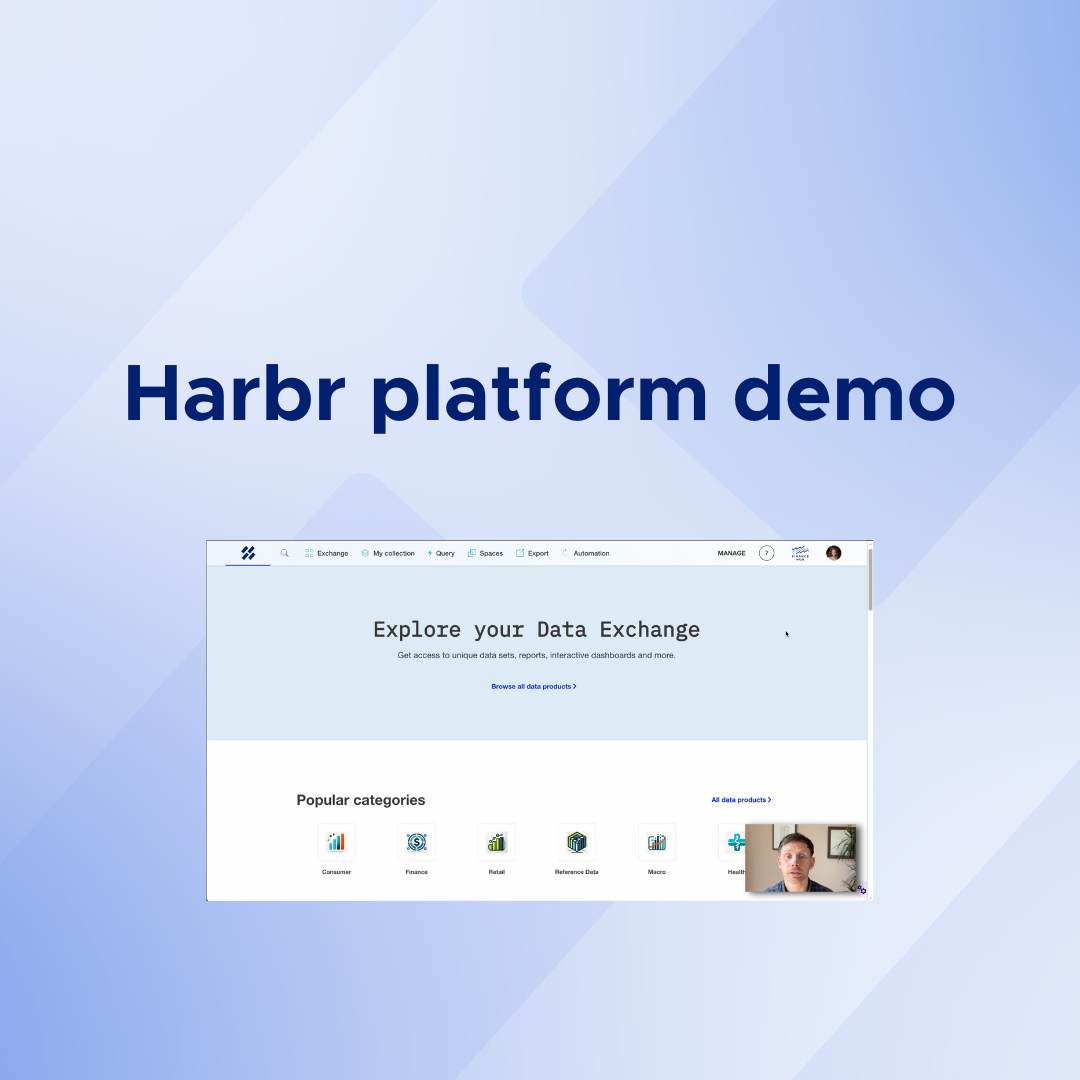
Harbr Demo 2025